Secure Test Browser: The Ultimate 2026 Guide to Secure Online Exams
A secure test browser is a purpose built application that completely locks down your computer during online testing. It blocks all unauthorized access, prevents tab switching, and guarantees airtight exam integrity. Whether you are a student in the USA taking a proctored exam or an IT administrator managing computer based testing for thousands of learners, this guide covers every critical detail. From system requirements and supported platforms to troubleshooting tips and training resources, we have everything covered right here.
1. What Is a Secure Test Browser and Why It Matters for Exam Integrity
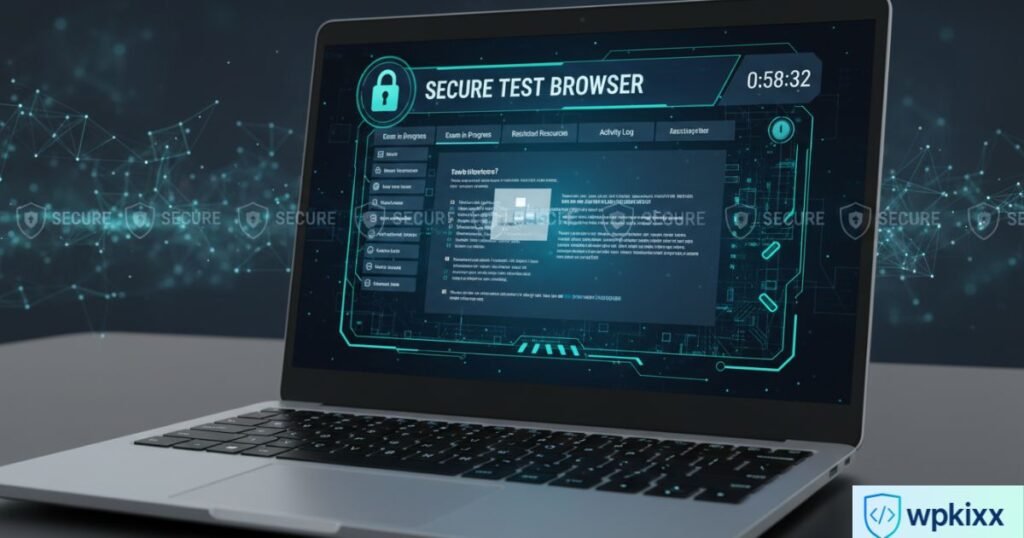
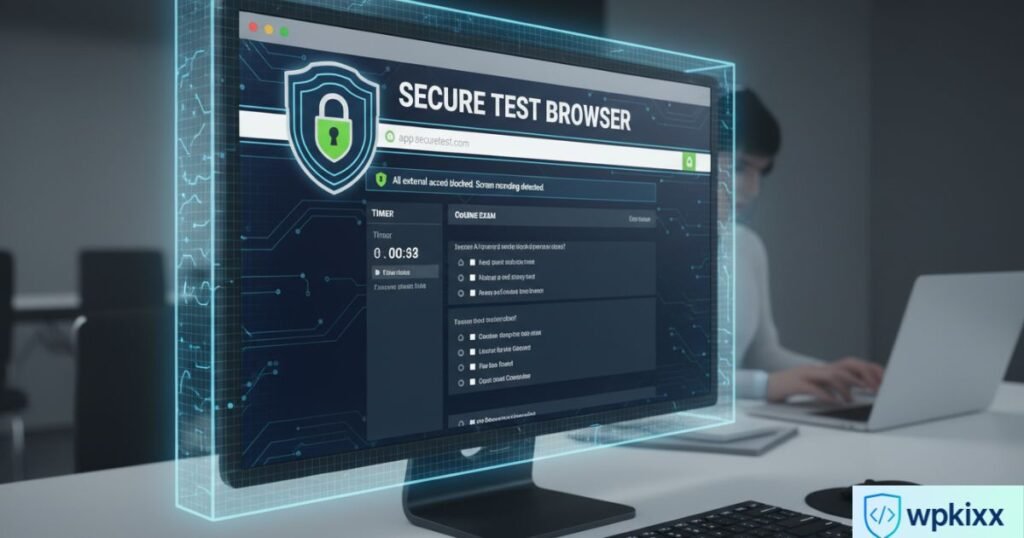
So, what is a secure test browser? Think of it as a digital lockbox for your exam session. It wraps around your test environment, shuts out every distraction, and makes cheating practically impossible. The browser operates in a locked kiosk mode. No shortcuts, no tabs, no copy paste, no screen sharing. Every test taker who uses accredited proctoring platforms in the USA must install and activate it before the exam begins.
Beyond simply blocking distractions, the secure test browser actively monitors your webcam, microphone, and screen throughout the entire session. It enforces technology readiness before you even start the exam. Without it, online exams become vulnerable and academically unreliable. It is the backbone of modern computer based testing across US institutions, certification bodies, and government assessments like CAASPP and ELPAC.
Key Functions at a Glance
- Kiosk lockdown — blocks all other apps and browser tabs
- Camera and microphone monitoring — active throughout the entire session
- Prohibited program detection — flags unauthorized software automatically
- Session integrity logging — records all activity for proctor review
- Secure encrypted connection — protects your exam data end to end
2. Proven System Requirements for Secure Test Browser on All Platforms
Before you even think about how to download secure browser, carefully check your device against the secure browser system requirements. Missing even one requirement prevents your exam from launching entirely. The minimum requirements for online exam include at least 8 GB RAM with 16 GB strongly recommended, 500 MB free disk storage, and a stable broadband connection running at 3 Mbps minimum. These are not optional suggestions for 2026 — they are hard requirements.
Your screen resolution must be at least 1024 x 768 in 16 bit color, though 1920 x 1080 in 32 bit is strongly recommended for the smoothest experience. RAM requirements matter enormously here. A device running low on memory will crash mid exam and potentially invalidate your session. Always free up at least 50% of available memory before launching. These are non negotiable technical specifications that apply to every supported platform in 2026.
Requirement | Minimum | Recommended (2026) |
|---|---|---|
RAM | 8 GB | 16 GB |
Disk Storage | 500 MB free | 1 GB+ free |
Screen Resolution | 1024 x 768 (16 bit) | 1920 x 1080 (32 bit) |
Internet Speed | 750 kbps | 3 Mbps or higher |
Operating System | 64 bit only | Latest stable release |
Camera | Forward facing webcam | HD webcam with 360 scan |
Microphone | Built in or external | Built in (no headsets) |
3. How to Download and Install the Secure Test Browser Without Errors
The secure browser installation guide starts with one golden rule: always download directly from your testing organization’s official website. Never trust third party sources under any circumstance. A corrupted download causes catastrophic exam launch failures on test day. Before downloading, disable antivirus for exam installation — this is a widely recommended best practice among IT administrators across the USA. Many antivirus programs silently block the installer without any error message.
Once downloaded, run the installer with full administrative rights. How to use secure test browser correctly begins right here — always prefer a personal computer over a work machine. Corporate devices often carry restrictive IT policies that block installation entirely. After setup, restart your device, test your camera detection, microphone, and internet connection before exam day. Solving issues early removes all last minute exam day panic.
Step by Step Installation Checklist
- Download installer from your official testing portal only
- Temporarily disable antivirus software during installation
- Run the installer with full administrator privileges
- Restart your computer after installation completes
- Test camera, microphone, and internet connection
- Complete the tutorial test before actual exam day
4. Supported Operating Systems: Windows, macOS, Linux, iPadOS & ChromeOS
Understanding supported operating systems for secure browser is absolutely critical before exam day arrives. Windows 10 and Windows 11 in 64 bit operating system editions are fully supported in 2026. However S Mode, Education, and Enterprise versions remain completely unsupported. Secure browser for Windows users should also know that Windows Snapdragon devices fall outside supported boundaries. Always confirm your exact Windows edition before attempting any exam.
For Mac users, macOS Sonoma (14.x) and macOS Sequoia (15.x) work perfectly. macOS Tahoe (26.x) support arrives October 2025. Secure browser for Mac users should disable Bluetooth before launching. On Linux, Ubuntu 22.04 and Ubuntu 24.04 LTS versions are the only supported releases. Secure browser for Linux users must switch from Wayland display server to X11 Xorg or the exam will not launch. Note that beta version operating systems are never supported by any testing platform.
Platform | Supported Versions | Not Supported |
|---|---|---|
Windows | Windows 10, 11 (64 bit) | S Mode, Enterprise, Education |
macOS | Sonoma 14.x, Sequoia 15.x, Tahoe 26.x | Ventura 13.x (ended Dec 2025) |
Ubuntu Linux | 22.04 LTS, 24.04 LTS | 20.04 (ended May 2025), Wayland |
ChromeOS | Chrome Extension only | Standalone browser not supported |
iPadOS | Limited support | Most iPad models unsupported |
Surface Pro | Fully supported (forward camera) | Other tablets not supported |
Mobile Devices | Photo ID capture only | Not allowed for exam or room scan |
5. Critical Configuration Settings to Maximize Secure Browser Performance
Knowing how to configure secure browser properly prevents the most avoidable errors. Start with your network. Corporate firewall restrictions and VPN software aggressively block the encrypted connections that proctoring platforms require. Always switch to your personal home network before exam day. Disable your VPN completely. Network security policies at corporate workplaces are the silent culprit behind most unexplained exam connection failures across the USA.
Next, simplify your hardware environment completely. Disconnect all secondary cameras and extra microphones before starting. Camera detection conflicts frequently arise when multiple devices compete for the same system driver. On macOS, always disable Bluetooth before launching. On Ubuntu Linux, never launch from the terminal console — use ‘run as a program’ from the desktop. Adjust your room lighting so your proctor can see you clearly. Secure browser performance issues drop dramatically when your testing environment is properly configured from the start.
Quick Configuration Checklist
- Disable VPN and corporate firewall before every exam attempt
- Disconnect extra cameras and microphones from your device
- Set screen resolution to 1920 x 1080 for best results
- Free up at least 50% available RAM before launching the browser
- Disable Bluetooth on all macOS devices before exam start
- Close every background application and unnecessary process
6. Common Secure Test Browser Errors (And How to Fix Them Fast)
The most frequent complaint from US test takers is secure browser not launching. Nine times out of ten, antivirus software is the silent culprit — it blocks browser processes without displaying any warning message. The fix is straightforward: temporarily disable active antivirus scanning before every exam attempt. If that does not resolve it, restart your computer completely and relaunch. These secure browser troubleshooting steps resolve the overwhelming majority of launch problems within just a few minutes.
Camera and microphone failures are the second biggest headache for test takers. For how to fix secure browser camera error, visit Twilio Video Diagnostics right away. Secure browser microphone not detected issues can be diagnosed at Online Mic Test. Lenovo users should always check the Vantage app for pending driver updates. HP, Dell, and Acer devices purchased before 2015 require manual driver updates. Understanding why is secure browser not working almost always leads back to one of these three root causes.
Error Type | Root Cause | Quick Fix |
|---|---|---|
Exam will not launch | Antivirus blocking process | Disable antivirus, restart, relaunch |
Camera not detected | Driver conflict or outdated driver | Update drivers, disconnect extra cameras |
Microphone not detected | Multiple mic drivers conflicting | Set default mic, disable others |
Bandwidth error | Slow internet connection | Run speed test, stop household streaming |
VPN blocking connection | Corporate firewall active | Disable VPN, switch to home network |
Screen display issue | Wrong resolution setting | Set 1920×1080, restart browser |
Session crashes mid exam | Low RAM or camera unplugged | Free RAM, never unplug camera mid session |
7. Bandwidth and Network Requirements for Flawless Online Testing
Understanding network requirements for computer based testing is absolutely non negotiable. The minimum accepted internet connection speed is 750 kbps, but best internet speed for online testing sits comfortably at 3 Mbps or higher for both upload speed and download speed. Broadband connection types including DSL, cable, fiber optic, and LAN/WAN all meet these requirements. Satellite internet, on the other hand, introduces dangerous latency spikes that can crash your session unexpectedly.
Always run a full network diagnostics check before exam day using Twilio Video Diagnostics. Confirm your internet bandwidth at Cloudflare Speed Test. Test at the same time of day as your scheduled exam — bandwidth requirements fluctuate significantly during peak evening hours in most US neighborhoods. Always ask everyone in your household to stop streaming or downloading during your exam window completely.
Bandwidth Quick Reference
- Minimum speed: 750 kbps upload and download
- Recommended: 3 Mbps or higher for both directions
- Diagnosis tool: video diagnostics.twilio.com
- Speed check: speed.cloudflare.com
- Avoid: VPNs, corporate firewalls, satellite connections, shared streaming
8. Secure Test Browser vs Chrome Extension: Which One Should You Use?
The secure browser vs Chrome extension debate comes down to your device and your exam provider’s requirements. The standalone secure test browser delivers deeper system lockdown. It restricts more system functions and integrates more tightly with the proctoring platform. The Chrome Extension is lighter and crucially supports ChromeOS devices which the standalone browser does not. Both options share identical bandwidth requirements and hardware specifications.
For secure browser for Chromebook users, the Chrome Extension is your only viable option. It installs quickly inside Google Chrome and runs smoothly without complex setup. However it provides slightly less restrictive lockdown than the full standalone browser. Virtual machine environments are unsupported by both options. A real physical device is always required. Always review your exam provider’s official documentation before choosing between the two options to avoid disqualification.
Feature | Secure Test Browser | Chrome Extension |
|---|---|---|
Lockdown Depth | Deep system lockdown | Moderate lockdown |
ChromeOS Support | Not supported | Fully supported |
Windows 10 / 11 | Yes (64 bit only) | Yes (64 bit only) |
macOS Support | Sonoma, Sequoia | Sonoma, Sequoia |
Ubuntu Linux | 22.04, 24.04 LTS | 22.04, 24.04 LTS |
Virtual Machine | Not supported | Not supported |
Tablet Support | Surface Pro only | Surface Pro only |
Mobile Devices | Not supported | Not supported |
9. Essential Training Resources for Students and Test Administrators
The technology readiness checker for students (TRCS) is a game like tool that simulates actual exam navigation. It is entirely optional but incredibly valuable before any high stakes test. Students navigate a storyboard interface that mirrors the real computer based testing environment. TRCS builds confidence and surfaces hidden device compatibility issues weeks before exam day. US institutions using CAASPP and ELPAC strongly recommend all students complete it well in advance of any interim assessments or final exams.
Administrators should keep the CAASPP and ELPAC configuration guide bookmarked. It covers technical specifications, hardware requirements, and operating system support in full detail. The System Downtime page reveals scheduled maintenance windows that could affect exam launch dates. Communicating how to prepare for online proctored exam resources to students at least two weeks before testing dramatically reduces last minute technical support requests and failed exam attempts.
Key Training and Preparation Resources
- Technology Readiness Checker for Students (TRCS) — simulate actual exam navigation
- CAASPP and ELPAC Technical Specifications and Configuration Guide for Online Testing
- System Downtime page — check scheduled maintenance before booking exam dates
- Known Issues page — review active bugs and available resolutions before testing
- Tutorial test — complete this before every exam to validate hardware and software
- Network Diagnostics page — verify bandwidth for expected number of simultaneous test takers
10. Frequently Asked Questions About Secure Test Browsers
Can I use a Chromebook with a secure test browser?
Chromebooks do not support the standalone secure test browser application. However the Chrome Extension works perfectly on ChromeOS devices. Always confirm with your exam provider whether the extension is officially accepted for your specific exam before test day.
What happens if my internet drops during the exam?
Connection drops are treated seriously by all proctoring platforms. Contact your exam administrator immediately if your internet connection fails mid session. Some platforms allow session resumption within a specific time window. Always document every detail and report the issue without delay.
Is the secure test browser safe for my personal computer?
Absolutely yes. The secure test browser runs only during active exam sessions. Once you close the exam your computer returns to completely normal operation. No permanent system changes occur and no personal data is stored or accessed beyond what your testing provider explicitly requires.
Why is my secure browser not working after an OS update?
New operating system support is typically added within 30 days of a public OS release. Beta version updates are never supported by any testing platform. If you updated to a new OS before official support was confirmed, you may need to wait or roll back temporarily. Always verify 64 bit operating system compatibility before any major OS upgrade on a device used for testing.
What devices are supported for secure browser in 2026?
Supported devices include Windows 10 and 11 PCs, macOS Sonoma and Sequoia Macs, Ubuntu 22.04 and Ubuntu 24.04 Linux machines, Surface Pro tablets, and Chromebooks via Chrome Extension only. iPadOS has limited support. Virtual machine environments, most tablets, and all mobile devices remain completely unsupported in 2026.
Final Thoughts
A secure test browser is not just software — it is the foundation of trustworthy online testing in 2026. From verifying your system requirements to configuring your network and preparing your students, every step in this guide moves you toward a smoother and more secure exam experience. Whether you use the standalone browser or the Chrome Extension, preparation is absolutely everything. Run your diagnostics early. Test your hardware well in advance. Never skip the tutorial session. Your exam success begins long before you ever click Launch.
For more helpful guides on computer based testing tools and exam technology in 2026, visit wpkixx.com for the latest resources and updates.